
Key takeaway
Conflict is normal in documents. Classify it first: version difference, scope difference, metric definition, or a genuine error. Present both sources, dates, applicable conditions, and excerpts, mark which is likely current, and do not adjudicate silently. Escalate conflicts affecting contracts, money, or safety.
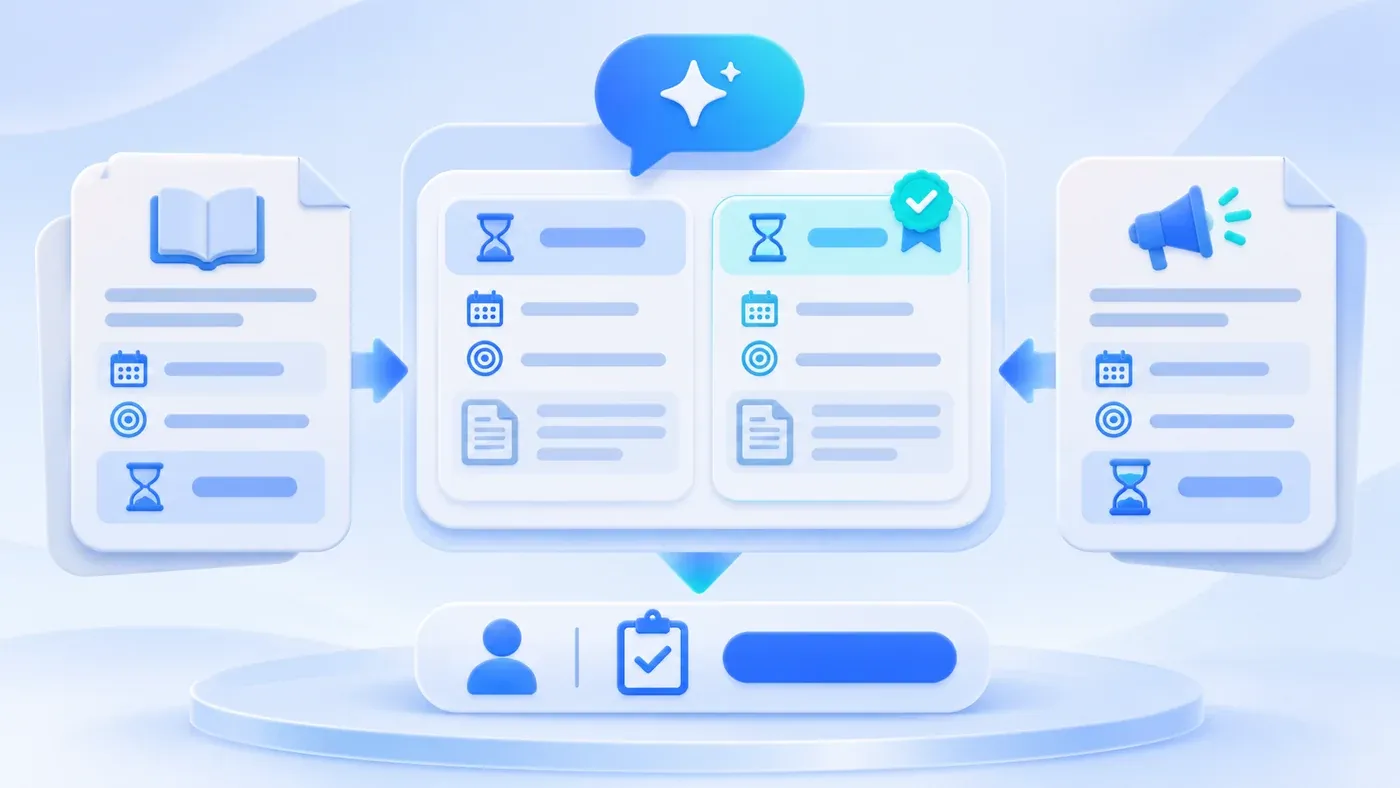
Take this illustrative scenario. A customer asks about the warranty period for a piece of equipment. AI retrieves two documents: the old product manual says one year for the whole machine, and a service notice published last month says two years. AI chooses the latter, answers "two years," does not mention the former, and does not explain why it chose.
The customer is pleased, and sales writes it into a contract annex. After-sales later follows the old manual, the customer produces a screenshot of the AI answer, and a dispute begins. The answer hid the conflict and presented an unconfirmed choice as settled.
Apply the current user’s source permissions before comparing documents. Show only titles, excerpts, and version details the user may access; explaining a conflict must not reveal restricted material.
Conflict is normal, not an exception
Wherever documents update, conflicts appear: the old version is still online while the new one is published; a global policy coexists with a regional rule; two departments hold different definitions. Retrieval finding both is a normal result.
The problem is not that conflict exists, but how AI presents it. Choosing silently hides the judgment; listing both without explaining their relationship leaves the user unable to decide.
Four kinds of conflict, handled differently
One: version difference. Different versions of the same document, with the new one replacing the old. The answer states version dates, identifies the current version, and marks the old one as historical.
Two: scope difference. Both documents are valid but apply to different regions, product lines, or customer types. Present both scopes so users can match their own situation.
Three: definition difference. Both numbers are right, but the time window, deduplication, or definition differs. Explain the definitions; do not compare magnitudes.
Four: a genuine error. One document is wrong, or retired but not removed. AI usually cannot determine which is wrong, so present both and route to a person.
Of the four, only the first may allow a "new version prevails" recommendation when version information is clear. The other three should not be adjudicated by AI.
Structure of a conflict answer
A conflict-aware answer includes at least:
- Each answer: written separately, not merged into one vague statement.
- Source for each: document name, section, version.
- Dates: publication or effective date, and when you checked.
- Applicable conditions: region, product line, customer type, order date.
- Likely relationship: which appears newer, whether one replaces the other, marked as judgment rather than fact.
- Next step: who confirms, or which condition the user should check.
For example: "On warranty, I found two documents: Product Manual v3 (June 2025) states one year for the whole machine; Service Notice 2026-10 states two years for equipment delivered after January 2026. The applicable delivery periods differ. Please confirm the delivery date, or contact after-sales."
Do not adjudicate silently
AI should not pick one as final because it "looks newer" or "has more text." Version dates, issuing department, and scope must be shown so the user can judge.
If the system has an authority ranking, such as company policy above departmental notice, define it in configuration and state it: "Under the company's source priority, this document applies." But the priority rule must be set by the business, not decided by the model on the spot.
When a recommended conclusion is acceptable
A recommendation may be given, with its basis stated, when:
- A new version explicitly replaces the old one and its effective date has passed.
- The company has a published source-priority rule covering both documents.
- The documents apply to different scopes, and the user has provided enough information to determine the applicable one.
Even then, keep the other source visible for checking. Conflicts affecting contracts, money, safety, or external commitments go to a person, not an AI conclusion.
A hypothetical answer set
Question | Conflict | Acceptable answer |
|---|---|---|
How long is the warranty? | Manual v3 says one year; notice 2026-10 says two | Present both with dates, note the notice covers equipment delivered after January 2026; ask for the delivery date or route to after-sales |
What is the maximum load? | Domestic version 500 kg; export version 450 kg | Present both with regions; ask for the destination before concluding |
How many orders last month? | Operations dashboard 120; finance 108 | Explain time, status, and dedupe differences; do not judge; advise choosing by purpose |
Is the clause still valid? | Old policy says yes; new notice is silent | Present both; note the notice does not explicitly repeal it; route to the policy owner |
The answers are short but keep sources and conditions. A user receives a reply that shows what is still missing, not one untraceable conclusion.
A conflict answer need not be long, but it must show where the answers differ and what still needs confirming. Merging them into "it depends" hides the conflict rather than resolving it for the reader. State the next person or document that can settle it.
Name the owner of that next step.
Do not soften the difference.
Compare Conflicting Versions, Conditions and Sources
[Document conflict answer checklist]

1. Detection
- Can the system present multiple relevant documents at once:
- Does it record document name, version, and date:
- Can it classify the conflict as version, scope, definition, or error:

2. Answer
- Are answers presented with sources rather than one alone:
- Are applicable conditions and dates stated:
- Is "likely current version" marked as judgment, not fact:

3. Adjudication
- Does the model avoid choosing silently:
- Is source priority defined by the business and configured:
- Are high-impact conflicts routed to a person:

4. Maintenance
- Are conflicts reported to the knowledge owner:
- Are old documents scheduled for retirement or marking:
- Are recurring conflicts counted:
Find a real pair of conflicting documents and ask AI the same question. If it gives one answer with no source, conflict presentation is not designed. How expired documents leave retrieval is in what to do when knowledge expires; abstention design is in the previous article's "I do not know" patterns. The scope of conflict organization and answer design can be discussed within AI applications and workflows. How document format affects retrieval is in why document format affects AI retrieval quality; the authority relationship between FAQ and knowledge base is in FAQ versus knowledge base.
Resolve unclear model and version identities first. Every competing statement should link back to its passage.
