Key takeaway
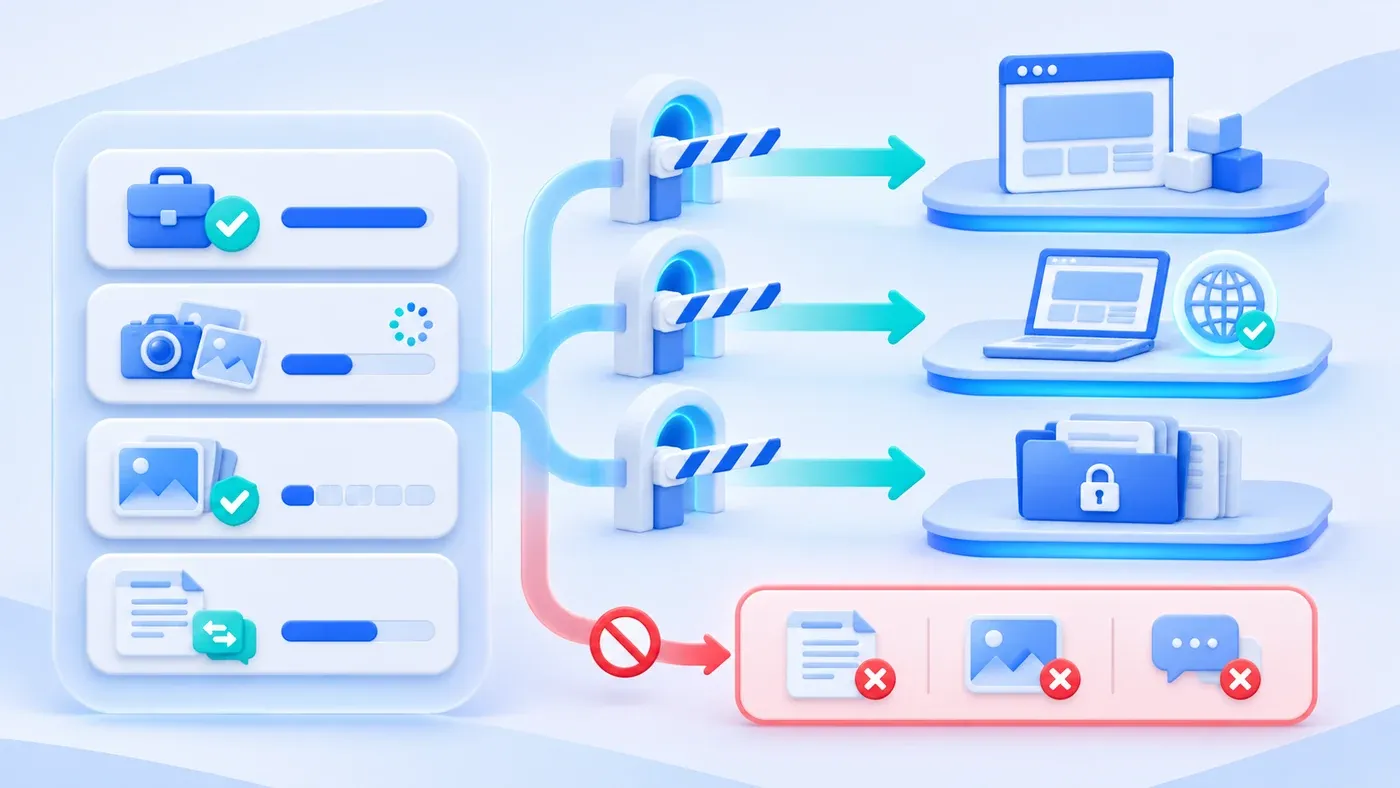
Yes, you can start without 100% of your assets—but never publish Lorem Ipsum, invented cases, or untranslated fallback text. Lock Day-1 essentials first (scope, live URLs, real logo, contact owners), supply specs during build, and hold uncleared items in draft until Phase 2.
Almost every team planning a corporate website or redesign hits the same pause: "Product photos will not wrap until next month, only two of ten case studies have written approval, and English copy is half-done. Should we wait until 100% of our assets are ready? If we start now, will the build stall halfway?"
The answer is yes, you can start without waiting for 100% completion—provided you lock a minimum viable foundation on Day 1, route remaining inputs into parallel build work and unpublished Phase-2 items, and enforce one strict rule: never launch with Lorem Ipsum text, invented case studies, unverified stock filler, or mixed-language fallback pages. As outlined in our Website Project Preparation Checklist and Delivery Process, bringing your existing URL, a clear summary of your offer, and one concrete goal is enough to map page scope and flag gaps cleanly.
Why "Waiting for 100%" and "Launching With Placeholders" Both Fail
Teams with partial materials often swing toward one of two traps.
Waiting for complete perfection rarely works in practice because product specs, shoots, and client permissions shift constantly. Delaying months for the last photoshoot often leaves early copy outdated while sales reps keep sharing an obsolete site. Writing copy in isolation—without seeing card limits or mobile layout constraints—also forces rewrites and reshoots once design begins.
The opposite mistake is rushing live with dummy placeholders to hit an arbitrary date. If an eight-slot case grid only gets two approvals by launch, filling empty slots with Lorem Ipsum, stock office photos, or an invented "Major Manufacturing Client" destroys buyer trust immediately. Launching /en/ pages with Chinese body copy inside English navigation creates the exact same failure.
Both shortcuts violate core search quality standards. Google Search Central's guide on Creating Helpful, Reliable, People-First Content stresses original first-hand detail, clear sourcing, and trustworthy page quality—warning against sloppy, hastily produced, or misleading pages. Likewise, Google Search Central's guide on Managing Multi-Regional and Multilingual Sites notes that search systems determine language from visible content; translating only boilerplate navigation while leaving body text in another language degrades experience and confuses language signals.
Starting early works only when you separate structural inputs from fill-in content (brief fields, asset file formats, and timeline mechanics sit in dedicated guides; this piece covers launch vs. deferral boundaries).
Split Materials Into Three Tiers: Day 1, In-Build, and Phase 2
- Agree the starting essentials
- Complete materials alongside development
- Keep unapproved or untranslated work private
- Publish completed work in stages
Tier 1: Day-1 Foundation Materials (Locked Before Design Starts)
Four foundational inputs govern navigation, ownership, and sign-off. Wireframing without them guarantees mid-build rework:
- Core Offer Scope and Phase-1 Goal: Priority product or service lines, target buyers, and items explicitly deferred to Phase 2.
- Live URLs and Technical Owners: For redesigns, key legacy URLs, top downloads, and domain, CMS, and hosting owners; for new builds, confirmed domain plans.
- Active Brand Mark and Statutory Strings: One current vector or transparent logo master, exact statutory company name, consistent English spelling (e.g.,
ChengXuYuan), and filing details. - Inquiry Channels and Sign-Off Owners: Domestic WeCom/form or international WhatsApp/email routes, plus named owners for lead response, factual checks, and final approval.
Tier 2: Parallel In-Build Materials (Supplied During Build)
Once Tier 1 is locked, three inputs can move alongside wireframes and development against a pre-QA freeze date:
- Phase-1 Product Specs and Reshot Photos: Categories and core selling points are enough to start wireframes. Once layouts fix exact image ratios and character budgets, photography and spec tables get completed cleanly in one pass.
- Case Studies in Active Review: Two signed-off cases suffice to validate list and detail templates; pending client approvals can run in parallel.
- Core English Business Localization: Rewriting English copy after Chinese structure and terms settle prevents translating moving targets.
Tier 3: Deferred Scope (Must Remain Unpublished Until Ready)
Anything unready at freeze belongs in Phase 2—never padded onto live URLs:
- Uncleared Cases and Restricted Screens: If only two of ten cases clear in time, publish only those two (or explicitly cleared brand marks and scope notes—never fake UI). Store the other eight as CMS drafts rather than faking grid items.
- Untranslated English Routes: Publish verified English URLs only. Disable silent Chinese fallback and keep incomplete English entries unpublished so visitors never hit hybrid pages.
- Non-Essential Additions: Deep vertical FAQs, secondary articles, interactive calculators, or CRM/ERP sync belong in Phase 2.
Hypothetical Scenario: Phasing a Bilingual Build With Partial Assets
Note: This hypothetical scenario demonstrates the phasing method only and does not represent a real client project or timeline promise.
Suppose an industrial testing equipment maker plans a bilingual site while studio shots are two weeks away, only 2 of 10 case studies have signed approval, and English covers only the homepage and two core lines:
- Kickoff (Day 1): The client provides boundaries for three equipment lines, domain access, the active logo, and named WeCom/WhatsApp responders. Design starts immediately—skipping empty industry portfolio filters that look bare with two cases.
- Parallel Build: Templates output exact shot ratios (front machine view, port close-up, workshop context) so reshoots finish in one batch. Two approved cases are built in full while eight pending cases remain CMS drafts.
- Controlled Launch & Phase 2: Phase 1 launches three equipment lines, two verified cases, process pages, and reviewed English core routes—zero
Lorem Ipsum, zero empty shells. Later approvals and translations go live directly via CMS switches without touching code.
Incomplete-Material Triage and Deferral Matrix
Asset Gap | Can Kickoff Start? | Immediate Build Action | Hard Launch Red Line (Forbidden) | Handling Remaining Gaps |
|---|---|---|---|---|
Missing scope, URL owner, logo, or contact owner | No — lock first | Run a brief alignment call to lock all four Day-1 inputs | Guessing offer scope or copying competitor menus | Lock Tier 1 before opening wireframes |
Product photos still shooting; older images exist | Yes | Set templates and issue exact shot lists (angles, ratios) | Publishing unverified web photos, competitor shots, or fake renders | Swap shoots before freeze; hold unshot models off live pages |
Only 2 of 10 cases have client clearance | Yes | Build and test templates with 2 cleared cases; trim empty filters | Inventing cases, | Launch 2 cleared cases (or cleared scope); store 8 in drafts |
Product specs or FAQs exist as rough outlines | Yes | Set section word budgets and factual reviewers during build | Launching live URLs with "TBD," "Coming Soon," or filler | Finish core offer pages first; stage secondary items in Phase 2 |
English copy finished for core pages only | Yes | Lock Chinese structure first, localize core routes, set readiness flags | Enabling silent Chinese fallback under | Launch verified English core routes; keep pending |
News, extended bios, or CRM sync TBD | Yes | Provision CMS collections and built-in form storage | Fabricating bios, news, or claiming unbuilt live integrations | Publish real updates later; scope external APIs in Phase 2 |
Copy-and-Use Phased Website Material Handoff Checklist
[Phased Website Material Handoff Checklist (Phase 0 / Phase 1 / Phase 2)]

Phase 0: Day-1 Kickoff Pack (Required Before Wireframes & Design)
- [ ] Business Scope: 1–2 core goals, priority offer list, and explicit Phase-2 exclusions
- [ ] URL & Hosting Baseline: Live URLs and domain/CMS/hosting owners (or new domain plan)
- [ ] Brand & Legal Identity: Active vector logo, statutory name, English brand spelling, filing strings
- [ ] Inquiry & Sign-Off Owners: Domestic/overseas contact targets, responder, factual reviewer, final approver

Phase 1: Launch Baseline Pack (Produced in Parallel, Frozen Before QA)
- [ ] Verified Core Copy: Homepage, priority products/services, about, and contact text with zero TBD gaps
- [ ] Cleared Real Visuals: Reshot photos uploaded at required ratios with source and usage notes verified
- [ ] Approved Cases Only: Project entries with written client clearance (live screen, redacted view, or mark)
- [ ] Bilingual Readiness Check: Every English route launching in Phase 1 reviewed for natural phrasing and terms
- [ ] Legal & Route Tests: Privacy policy, terms, inquiry form storage, and WeCom/WhatsApp links verified end to end

Phase 2: Deferred Additions Pool (Kept Unpublished in CMS Drafts Until Cleared)
- [ ] Pending Case Clearances: Stored in CMS drafts with approval owners logged (never padded onto live grids)
- [ ] Staged Translations & Articles: Target locale readiness toggle kept off to block mixed-language pages
- [ ] Secondary Modules & Integrations: Deep FAQs, future news, and CRM/ERP APIs scheduled post-launch

Zero-Placeholder Launch Gate (Hard Go/No-Go Check)
- [ ] Zero Lorem Ipsum, "Coming Soon," "TBD," or invented stats anywhere on public URLs
- [ ] Zero unverified stock downloads or unauthorized client screenshots exposed to visitors
- [ ] Zero untranslated Chinese fallback paragraphs accessible under public /en/ URLs
Incomplete materials rarely need to block your website kickoff—the real risk is bundling unready items with the clear story you can already tell today. If you are preparing a build or redesign with partial assets on hand, explore our Corporate Website & Standalone Site Services or bring your Phase-0 essentials to our consultation page to map out a reliable launch baseline and Phase-2 rollout.
